Last Updated: July 4, 2026
Key Largo was about a 3-hour drive south from Jupiter, Florida. The Florida Keys offer something unlike anywhere else in the continental United States — an island chain stretching 120 miles into the Gulf of Mexico and the Atlantic, connected by 42 bridges along the Overseas Highway. We were looking forward to being in the Florida Keys again, even though they can be warm and humid in December. For us, the wildlife and scenery more than made up for the weather.

Key Largo, Florida

Key Largo is the northernmost and largest of the Florida Keys. U.S. Highway 1 becomes the Overseas Highway as it connects the Florida mainland to the Keys, threading through mangrove islands and over open water on 42 bridges. On weekends, traffic from Miami can back things up considerably, but the scenery — Atlantic on one side, Florida Bay on the other — makes any delay entirely forgivable. We had visited the Keys before and already knew what a special place it is, but arriving always feels like a reward.
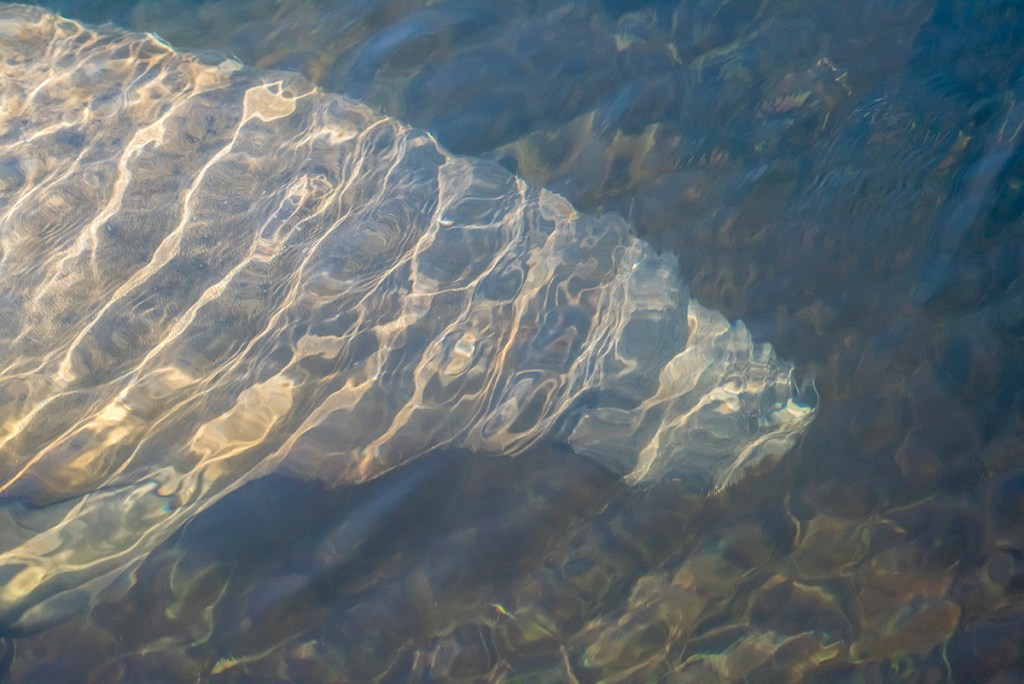
Key Largo is renowned for scuba diving and snorkeling, especially at John Pennekamp Coral Reef State Park — the first underwater state park in the United States. The park protects about 70 nautical square miles of coral reefs and seagrass beds, home to over 600 species of fish and an extraordinary abundance of marine life. We spotted manatees gliding effortlessly through the clear, warm water — an encounter that never gets old no matter how many times you experience it.

Moon jellyfish were also a common sight near the docks and in the shallows — beautiful, otherworldly creatures that serve as a reminder of how rich the Keys ecosystem truly is.

At mile marker 81.5 in Islamorada stands a sobering monument to those who endured, and the 423 who perished, when a catastrophic Category 5 hurricane slammed the Keys on Labor Day weekend in 1935. Many of the dead were World War I veterans stationed here as part of Roosevelt’s New Deal, building the highway that would eventually connect Key West to the mainland. When the government failed to evacuate them in time, Ernest Hemingway — who was in Key West when the storm hit — wrote a scathing essay condemning those responsible, calling out what he saw as a criminal neglect of men who had already given so much to their country.

There is no shortage of great restaurants in Key Largo. Mrs. Mac’s Kitchen delivered exactly what you want after a day exploring — delicious food, good wine, and that unhurried, laid-back Keys vibe where nobody is in a hurry to be anywhere else. The walls are covered in license plates and memorabilia, the food is comfort-forward and fresh, and the energy in the room is always warm and welcoming.

Robbie’s in Islamorada is a bit touristy, but in the best way possible. Their famous “Trailer Trash Bloody Mary” comes loaded with shrimp, pickled green beans, beef jerky, and celery — genuinely a full meal in a glass. But the real attraction at Robbie’s is watching the massive tarpon gather at the dock, some of them over six feet long, lunging for baitfish tossed by visitors. It is chaotic, loud, and absolutely wonderful.


The tarpon feeding at Robbie’s draws pelicans as well, which line the dock railing like spectators at a sporting event, waiting opportunistically for any scraps that come their way.

Happy hour at The Big Chill in Key Largo, overlooking Florida Bay, was one of those perfect moments that stays with you. The combination of a cold glass of wine, warm December air, and a sunset that set the entire sky on fire made everything feel exactly right. It is the kind of place that makes you understand why people move to the Keys and never leave.
Keys Palms Luxury RV Resort, Key Largo

Keys Palms Luxury RV Resort is located right on the water at mile marker 104, making it one of the most scenic campgrounds in the Florida Keys. We had full hookups, solid wifi, and good satellite reception. Our site faced the water, giving us uninterrupted views of the Gulf all day long — from morning coffee to evening cocktails. The resort was well-maintained and quiet, and the location could not be beat.

There is something about a cold beer and a Gulf of Mexico sunset that makes the mind go quiet. The Keys have that effect — the pace slows to match the movement of the tides, and the usual noise in your head just dissolves.


Every evening the sunsets delivered something different — blazing oranges, soft pinks, deep reds — and never once disappointed. The Keys are a photographer’s paradise during the golden hour.

The mornings were just as rewarding. Waking up to a quiet Gulf sunrise with the only sounds being lapping water and the occasional bird call — it is the kind of morning that reminds you why you chose this lifestyle.

Even though we stayed at a marina, we were continually amazed by the wildlife. Jake the dog was particularly captivated by the manatees — he would sit at the edge of the dock and stare into the water for extended periods, as if willing them to appear.

Beyond the manatees, the marina and surrounding waters delivered a steady parade of wildlife: a belted kingfisher hunting from the pilings, nurse sharks and stingrays cruising the shallows, moon jellyfish drifting past the dock. We never had to go far to find something worth photographing.


The iguanas are not native to the Keys — they are an invasive species first spotted in South Florida in the 1960s, likely escaped or released pets, and they have established themselves thoroughly across the archipelago. Much like Burmese pythons in the Everglades and lionfish in the reefs, they are here to stay. Jake found them endlessly fascinating and followed their movements with intense concentration from a respectful distance.
Everglades National Park

Everglades National Park is one of the truly singular places on Earth — the largest subtropical wilderness in the United States, covering 1.5 million acres of slow-moving water, sawgrass prairies, mangrove forests, and hardwood hammocks. Unlike many of the country’s most famous national parks, the Everglades draw relatively modest crowds, which means you can often have a boardwalk entirely to yourself while watching alligators from ten feet away. It is extraordinary. Learn more at the NPS website.


The alligators were absolutely everywhere — on the banks, in the water, and occasionally right on the boardwalk itself. American alligators can reach 15 feet in length and are primarily freshwater animals, though they can tolerate brief periods in brackish water. They prey on fish, turtles, small mammals, and birds. Seeing them up close in the wild, with nothing between you and a large prehistoric reptile but a few planks of wood, is an experience you do not forget.


The Everglades is one of the only places in the world where both alligators and crocodiles coexist, and we were fortunate enough to spot both species. American crocodiles prefer brackish and saltwater habitats, can reach up to 20 feet in length, and are distinguished from alligators by their narrower tapered snout and lighter grayish coloration — with more exposed teeth even when the mouth is closed. They are a threatened species, and the Everglades are critical to their recovery.

We enjoyed the boardwalks throughout the park, which provide easy, accessible viewing of the Everglades’ remarkable wildlife. Surprisingly, the mosquitoes and no-see-ums — which can be legendary here in summer — were not bothersome on this particular December day.


Manatees at the Flamingo Marina congregated near the dock, completely unbothered by our presence. West Indian manatees are primarily herbivores, feeding on aquatic vegetation, though they occasionally eat small invertebrates. Jake the dog spotted them immediately and pressed himself against the railing, riveted — he has always had a remarkable affinity for manatees.


Freshwater turtles were plentiful throughout the park, almost always found balanced on logs or submerged branches, soaking up the Florida sun. Their ability to stack three and four deep on a single log never stops being amusing.

Wood Storks are the only stork native to North America, and the Everglades are critical nesting habitat for them. They are large, striking birds — nearly four feet tall with a massive wingspan — and they feed by feel, sweeping their open bill through the water and snapping shut on anything that touches it.

Great Blue Herons are among our favorite birds to photograph — their patience is remarkable, and they seem completely unbothered by nearby observers. This one stood perfectly still at the water’s edge for several minutes, watching for fish with the focused intensity of a surgeon.


Both Snowy Egrets and Great Egrets were abundant throughout the park. The easiest way to tell them apart: Snowy Egrets are smaller with a black bill and bright yellow feet, while Great Egrets are larger with a yellow bill and black feet. Both are elegant and endlessly photogenic near the water.

This bird had us puzzling for a while in the field, but we believe it is a juvenile Yellow-crowned Night-Heron — the streaked brown-and-white plumage is characteristic of the immature birds, which look quite different from the striking black-and-white adults. In a single day of walking the Everglades boardwalks we identified well over fifteen bird species.


Anhingas are fascinating birds — unlike most waterbirds, their feathers are not waterproof, which allows them to swim with reduced buoyancy to chase fish underwater. The tradeoff is that they must dry their wings in the sun after every dive, which is why you so often see them perched with wings spread wide. Despite their superficial resemblance to cormorants, the key distinction is the bill: anhingas have a straight, spear-like bill, while cormorants have a hooked bill.

A Double-crested Cormorant, showing that characteristic hooked bill for comparison. Like anhingas, cormorants also dive for fish underwater, but they rely more on their feet for propulsion rather than their wings.

An osprey with a freshly caught fish, taking its time with the meal. Ospreys are highly specialized fish hunters — they have reversible outer toes and spiny foot pads that help them grip slippery prey, and they always orient their catch headfirst to reduce drag in flight. They are one of the most widely distributed raptors in the world.

A Red-shouldered Hawk watching us from a low branch. These hawks are common in the Everglades, preferring wooded swamps and floodplain forests where they hunt frogs, snakes, lizards, and small mammals. They are among the most vocal of all American hawks.


The Purple Gallinule was one of the day’s most spectacular sightings — an iridescent jewel of a bird, with plumage that shifts between purple, teal, green, and blue depending on the light. They walk across floating vegetation on remarkably long toes, foraging over lily pads without sinking. The Brown Pelican, by contrast, is more understated but equally impressive, patrolling the open water with that characteristic mix of grace and awkwardness.

Black Vultures are a regular sight throughout the Everglades, playing an essential ecological role as nature’s cleanup crew. They are highly social birds and are often found near parking lots and picnic areas where they have learned that humans sometimes provide an easy meal — keep your food secured.


Amid all the wildlife, the Everglades also reward those who look closely at the plant life. The Yellow Water Lily blooms across the freshwater marshes, and the Crinum Americanum — the swamp lily — produces delicate white flowers along the water’s edge. Both are native to the Everglades and contribute to the otherworldly beauty of this remarkable ecosystem.
The Everglades remain one of the most biodiverse places we have visited in all of our travels, and we left with a deep appreciation for why protecting this fragile, irreplaceable wilderness matters so much. If you have never been, put it on your list.
Visitor Information
John Pennekamp Coral Reef State Park
John Pennekamp Coral Reef State Park is at 102601 Overseas Highway, Key Largo, FL 33037, phone (305) 451-6300. Open 8:00 a.m. until sunset, 365 days a year; visitor center and concession buildings open 8:00 a.m. to 5:00 p.m. Admission is $8.00 per vehicle plus $0.50 per person (up to 8 occupants); single-occupant vehicles pay $4.50; pedestrians and cyclists pay $2.50 per person. Snorkel, dive, and glass-bottom boat tours are available at additional cost. Visit floridastateparks.org for tour schedules and reservations.
Robbie’s of Islamorada
Robbie’s is at 77522 Overseas Highway, Islamorada, FL 33036, phone (305) 664-8070. Open daily 7:00 a.m. to 9:00 p.m. Dock admission is $2.50 per person; a bucket of baitfish for tarpon feeding is $3.00. Kayak rentals, snorkel tours, fishing charters, and the Hungry Tarpon Restaurant and Bar are also on site. Visit robbies.com.
Keys Palms Luxury RV Resort
Keys Palms Luxury RV Resort is at 104200 Overseas Highway, Key Largo, FL 33037 (Mile Marker 104), phone (305) 440-2832. Full hookups, waterfront sites, and a quiet setting on Florida Bay. Visit keyspalmsrvresort.com for rates and reservations.
Everglades National Park
The main Ernest F. Coe Entrance is at 40001 State Road 9336, Homestead, FL 33034, phone (305) 242-7700. The main entrance is open 24 hours, 365 days a year; visitor centers are generally open 9:00 a.m. to 5:00 p.m. Entrance fees: $35.00 per vehicle (all occupants, valid 7 consecutive days), $30.00 per motorcycle, $20.00 per person on foot or bicycle (ages 16 and older; children 15 and under are free). Note: beginning January 1, 2026, non-U.S. residents 16 and older are subject to an additional $100.00 fee. The America the Beautiful annual pass covers entrance. Visit nps.gov/ever for current information.
Practical Tips for Visiting Key Largo and the Everglades
Plan for mosquitoes. The Everglades can have brutal mosquito and no-see-um pressure, particularly in summer and after rain. We were fortunate during our December visit, but always bring strong insect repellent — DEET-based products or picaridin are most effective. Long sleeves and pants help considerably on the boardwalks.
Go early for wildlife and photography. Both the Keys and the Everglades reward early risers. Wildlife is most active in the first two hours after sunrise, the light is soft and beautiful, and the boardwalks are quieter. A telephoto lens — even a 70–300mm — will serve you well for birds and alligators.
Drive the Overseas Highway slowly. The stretch of US-1 through the Keys is worth savoring. Stop at the historic bridges, pull over at roadside parks, and don’t be in a rush. Some of the best wildlife sightings happen when you slow down and look carefully at what’s around you.
Book Keys accommodations well in advance. The Florida Keys have limited RV and camping options, and they fill quickly — especially from November through April. Keys Palms in particular tends to book out months ahead during the winter season. Reserve as early as possible.
Respect the wildlife. In the Everglades, it is common to encounter alligators on or very near the boardwalks. Stay on the designated paths, keep a safe distance of at least 15 feet, never feed the animals, and keep dogs leashed at all times. The wildlife is wild — treat it accordingly.
Plan extra time for the drive to Flamingo. The Flamingo area at the southern end of the park is where you are most likely to see manatees and crocodiles, but it requires a 38-mile drive from the main entrance. Allow at least half a day for the round trip, and check the NPS website to confirm the visitor center is open before making the drive.
Frequently Asked Questions
Is Key Largo worth visiting in December?
Absolutely. December is one of the best times to visit Key Largo and the Florida Keys. Temperatures are warm but comfortable — typically in the low-to-mid 70s°F — humidity drops significantly compared to summer, and mosquito pressure in the Everglades is at its annual low. Crowds are present but not at peak holiday levels. We consider it an ideal month for the Keys.
Can you see alligators and crocodiles in the same place?
Yes — Everglades National Park is one of the only places in the world where both species coexist. Alligators prefer freshwater and are found throughout the park’s inland marshes and boardwalk areas. American crocodiles prefer saltwater and brackish environments and are most commonly seen near the Flamingo marina at the park’s southern tip. They are easy to tell apart: alligators have a broad, rounded snout and darker skin, while crocodiles have a narrow, pointed snout and lighter grayish coloration.
Is Robbie’s worth a stop in Islamorada?
Yes, especially if you have never done tarpon feeding before. The experience of hand-feeding giant, prehistoric-looking fish while pelicans crowd the rails waiting for scraps is genuinely memorable. The Bloody Marys are famously generous, the atmosphere is lively, and kayak and snorkel tours are available if you want to extend your visit. Budget one to two hours for the full experience.
Is Everglades National Park good for birdwatching?
Exceptional. The Everglades support over 360 bird species, and a single December day on the park’s boardwalks can yield 15 or more species without any real effort. We saw Wood Storks, Great Blue Herons, Great and Snowy Egrets, Yellow-crowned Night-Herons, Anhingas, Double-crested Cormorants, Ospreys, Red-shouldered Hawks, Purple Gallinules, Brown Pelicans, and Black Vultures — all in a single visit. Bring binoculars.
What is the best way to see manatees in the Florida Keys?
Manatees are frequently spotted from docks and marinas throughout the Keys, particularly in winter when they gather in warm-water areas. Keys Palms RV Resort in Key Largo is an excellent spot — manatees regularly visit the marina. John Pennekamp Coral Reef State Park offers glass-bottom boat tours where manatee sightings are common. The Flamingo Marina in Everglades National Park is another reliable location, especially in cooler months when manatees seek out warmer water near the marina.